
Where science loses its audience — and how to win it back.
The gap between what researchers know and what their audiences understand is not a failure of science. It is a failure of translation. Funders, institutional partners, patients, and the general public do not share the same vocabulary, the same level of prior knowledge, or the same reasons for paying attention.
Structured working sessions with your team to formalise what makes your research, technology, or company genuinely different. What is the problem you solve? For whom? Why now? Why you? These four questions, answered with precision, become the backbone of every content asset that follows.
A written brief defining how your organisation speaks — the level of technical detail appropriate for each audience, the register (rigorous, accessible, inspiring, institutional), and the editorial red lines that preserve scientific integrity across all channels.
Identification and characterisation of your key audiences: their level of scientific literacy, their decision criteria, their preferred formats, and the moments in their journey when they are most receptive. For life sciences organisations, this typically covers academic peers, institutional funders (ANR, BPI, EU agencies), clinical partners, investors, and the broader public.
A prioritised content plan — what to publish, where, in what format, and at what frequency — structured around your communication objectives (visibility, funding, recruitment, patient engagement, public trust) and your available resources.
Articles of scientific popularisation, interview formats, press releases, social media content, newsletters, annual reports, project websites — produced in French and English, with systematic peer review by subject-matter experts to guarantee scientific accuracy.
For Horizon Europe projects: drafting of the dissemination and communication sections of the DEC plan, production of public-facing content aligned with EU reporting requirements, and editorial coordination across consortium partners.
The right words, for the right audience, at the right moment.
KOM builds content strategies that close this gap — not by simplifying science, but by finding the narrative register that makes it legible without making it less rigorous. This is the dual constraint that defines science communication in life sciences and deeptech: accuracy is non-negotiable, yet accessibility is the condition for impact.
Academic researchers and laboratory teams
You have results worth sharing — with funders, with clinicians, with the public — but you lack the time, the editorial distance, or the communication skills to translate them without losing their substance. KOM works alongside your team to produce content that is both scientifically sound and genuinely readable.
Horizon Europe project coordinators
Your dissemination plan commits you to a volume and quality of public-facing content that your research team cannot produce alone. KOM takes on the editorial coordination of your communication work package — from the initial strategy to the final deliverable.
Deeptech SAS
You are building a company around a scientific innovation and need to tell a story that works simultaneously for academic partners, BPI evaluators, and venture capital investors. These three audiences do not read the same language. KOM writes the three versions — without contradiction.
Science popularisation — a case study.
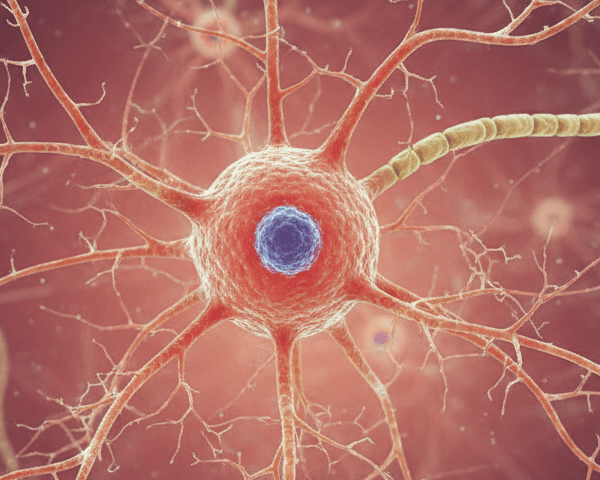
Memory loss : what if waking up dormant neurons could protect it?
Dr Nora Abrous, a neuroscience researcher at Bordeaux Neurocampus and laureate of the Fondation pour la Recherche sur le Cerveau, published a major study in Molecular Psychiatry on the role of newborn neurons in age-related memory decline. The research is highly technical: it involves hippocampal neurogenesis, glutamatergic synaptic inputs, mitochondrial homeostasis, and optogenetic stimulation. The content challenge was to make these mechanisms accessible to a non-specialist audience — donors, patients, caregivers, and the general public — without distorting the science or overstating the clinical implications.
Have a project in mind?
working together
Send a message.